Bruges

IMG_1511.JPG

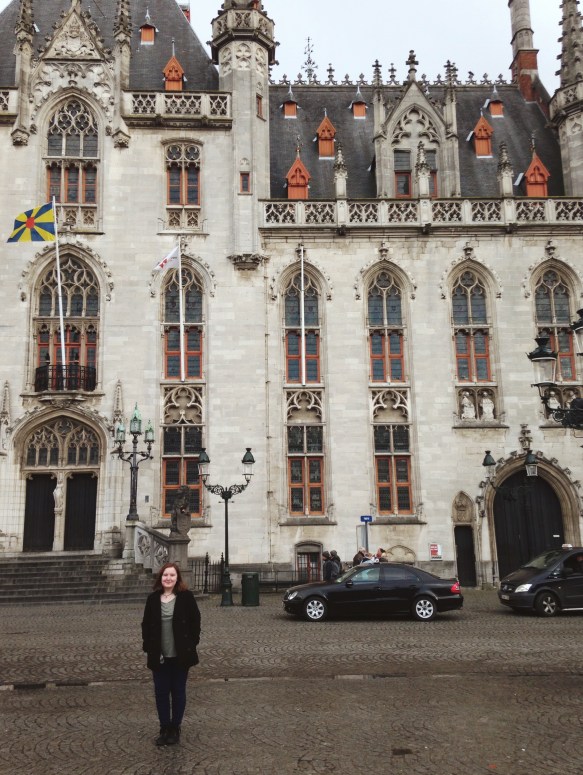
Today we explored Bruges, an incredibly beautiful city! It has been my favorite thus far. I loved seeing of of the swans drifting through the canals, the stone bridges arching over the water, and the chocolatiers lining every cobblestone street. My favorite part of the day was visiting a cafe during a bit of free time. I wish we could have spent more time enjoying the quiet ambience of the coffeeshop and sipping on hot chocolates, but we were on a bit of a time crunch, and had to drink the beverages faster than they could cool. I wish I could have gotten a picture of the shop or the drink, but my phone died pretty early on in the daytime, so I was not able to take many photos of any of the evening activities.
bc3aacc284f93b935dd2cd6eab4d724d.jpg download.jpeg


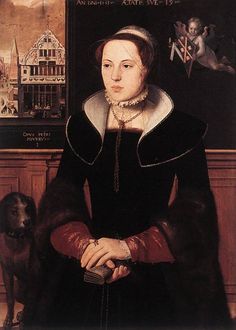
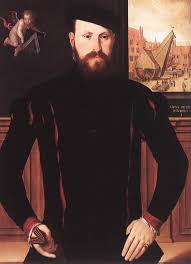
At the Groeninge Museum there were many beautiful paintings. Two that I am to report on are Pieter Pourbus’s portraits of Jan van Eyewerve and Jacquemyne Buuck. These paintings hung side by side in the museum and were filled with symbols. The dog in the portrait of the women is commonly represented as a sign of fidelity and faithfulness. Neither of the people are looking directly at the viewer, which can be seen as non-confrontational. Our tour guide slyly joked that their lack of eye contact makes it look like they’re “on drugs,” which was amusing. The ages of the two when they were married are also written above their heads; the woman is nineteen and the man is twenty-nine. Two other paintings from the museum that I really loved were Portrait of Sylvie de la Rue by Franciscus Joseph Octave van der Donckt and Portrait of a Bruges Family by Jacob Van Oost.
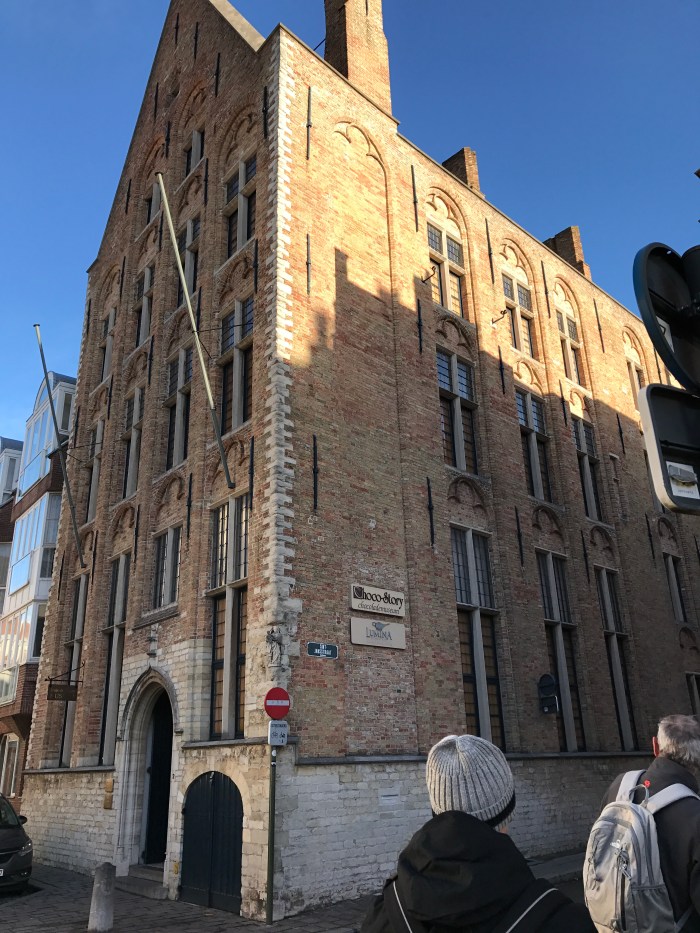
The Chocolate Museum

Today was the second day of being in Belgium!! We had the chance to visit one of my favorite stops by far, the chocolate museum. IMG_0472.JPGOur guide took us through the entire museum where we learned how to make chocolate, discuss where chocolate comes from, and of course enjoyed lots of chocolate!
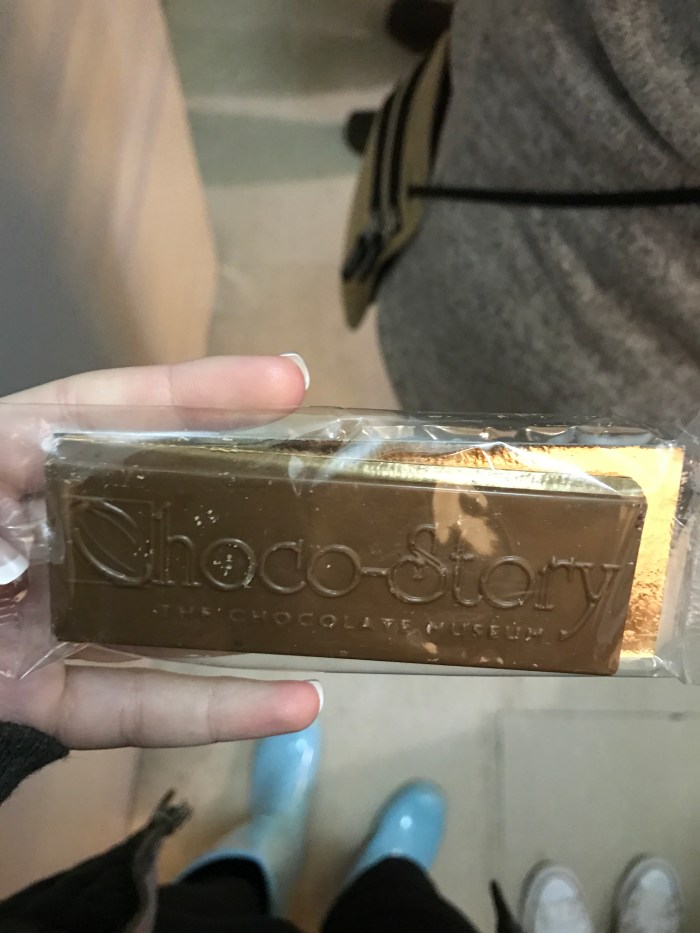
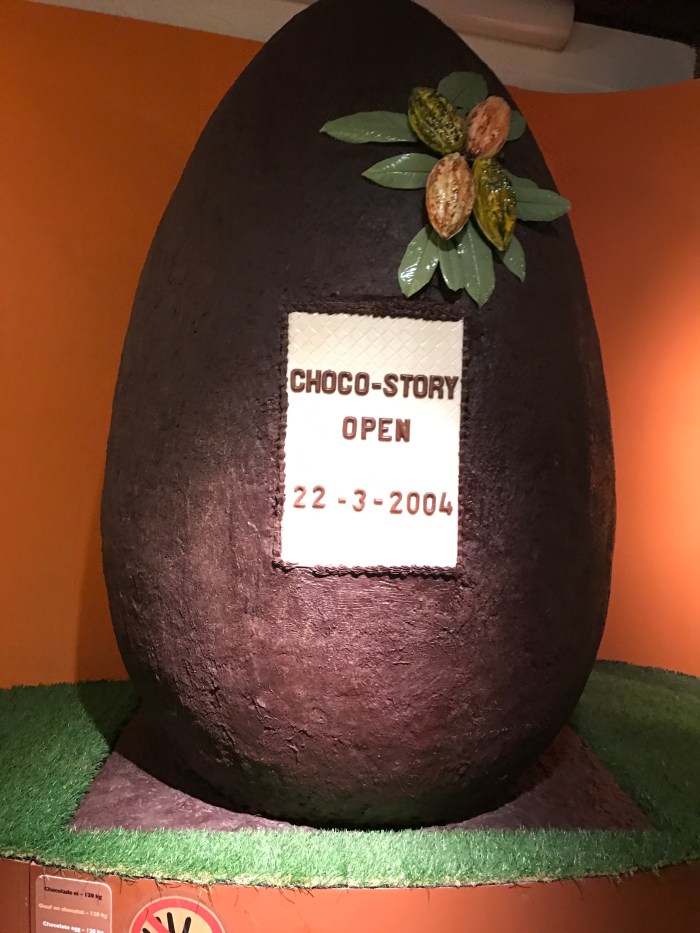
When we first entered the doors a lady handed us each a sample of chocolate and then a whole chocolate bar, as you can see below.

img_0473

We passed a huge cocoa bean which we learned is where chocolate comes from, well is a major ingredient in chocolate.

IMG_0474.JPG

Our guide led us to a small presentation where we actually had a chance to watch one of the chefs make the chocolate right in front of us. He first made the hard shell by pouring the liquid chocolate into a tray with different designs. Then putting them in the freezer to harden. After hardening, he poured a caramel filling into the shell and put it in the fridge to harden again. Finally, once hardened he poured another layer of chocolate over the caramel and let it freeze one more time. Then the chocolates are ready to be eaten.

IMG_0476.JPG

We finished the museum by leaving through the gift shop where they sold lots of chocolate and chocolate based lotion and lip balm. The museum was so much fun and one of the best parts of this trip so far!

The ART!

Day two:

Today we traveled to Bruges and spent the entire day there exploring the small area. Apparently, it’s only 7 miles (?) around the place and we walked at least 6.99 of those miles. We were able to see the architecture, the chocolate, the cathedrals, and of course the art.

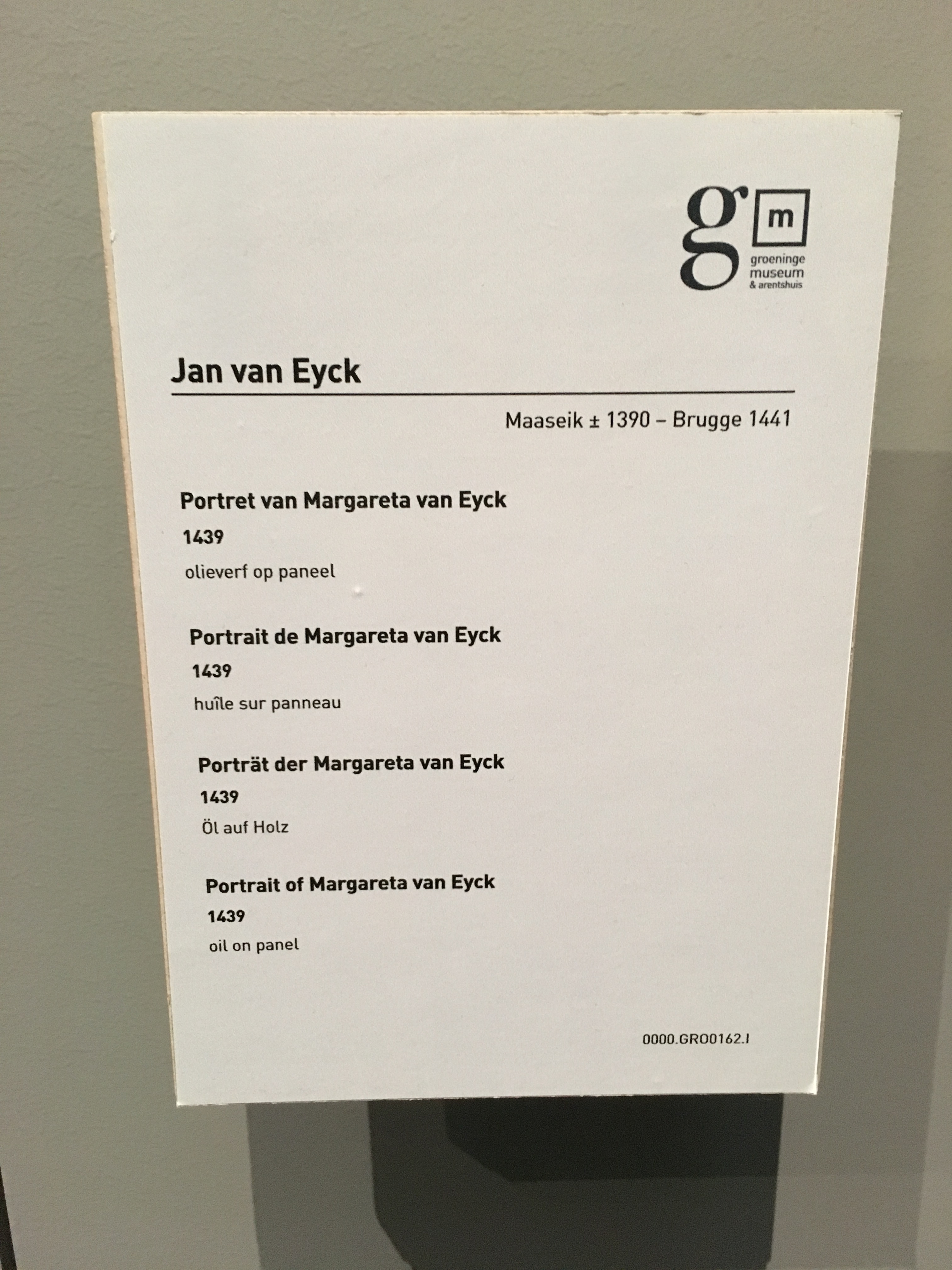
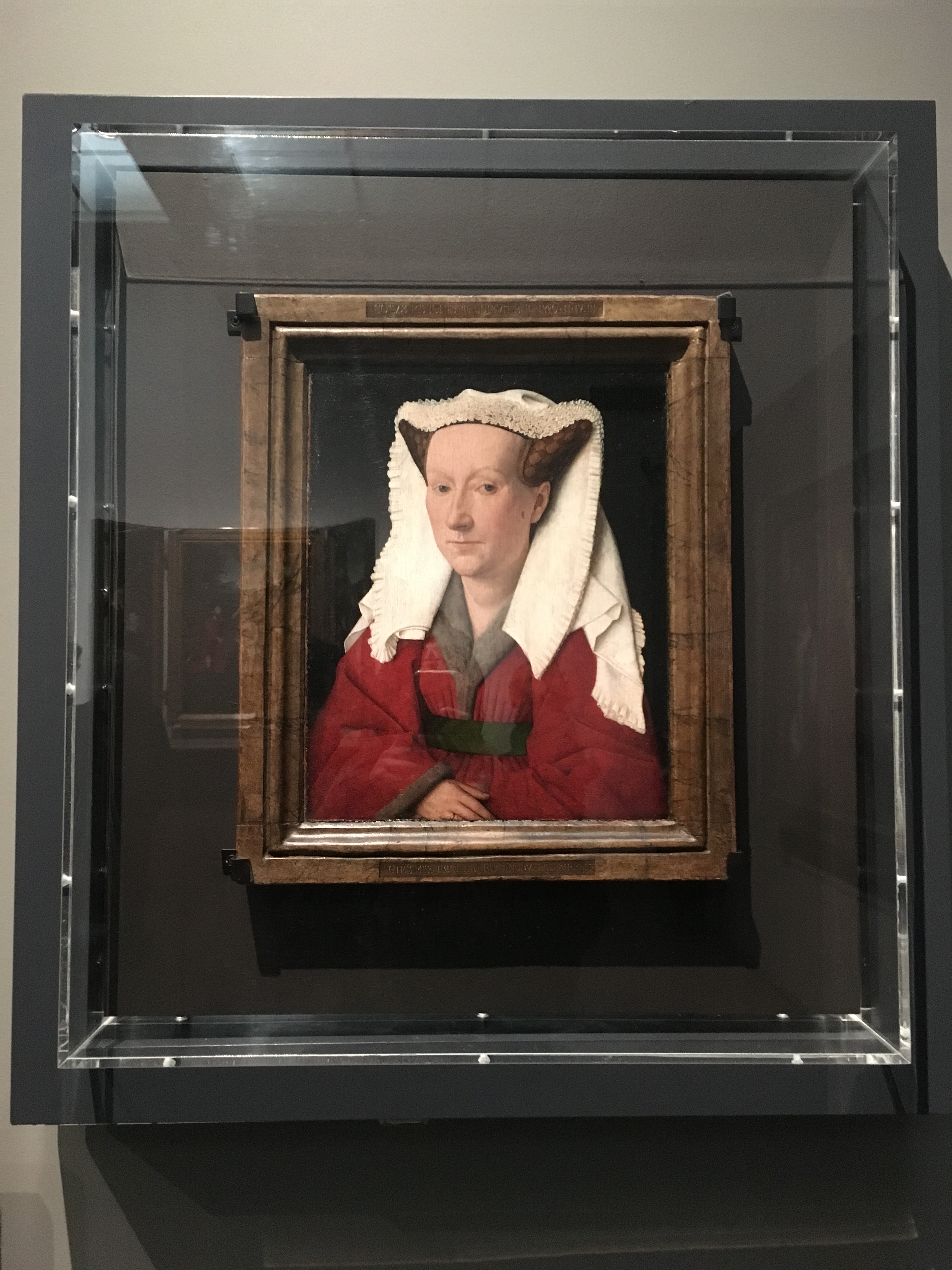
I focused on one specific piece in the Groeninge museum: Portrait of Margareta Van Eyck by Jan van Eyck.

File_000.jpeg

File_000 (2).jpeg


Jan van Eyck is a well known artist today, partially due to his use of detail and realism. What I found particularly interesting about this piece was the way that women of the 1400s dressed and portrayed themselves. Notice how Eyck painted her exactly how she would appear in real life: balding head, long sharp nose, and bundled up in clothes. Women in the 15th century actually shaved their foreheads so it would appear larger (large foreheads was a trend). Additionally it was not proper to have your hair lose, it always had to be tied back tightly or else it was considered indecent. This is a simple piece by Eyck but the detail and realism of it really stands out to me.

The Groeninge Museum

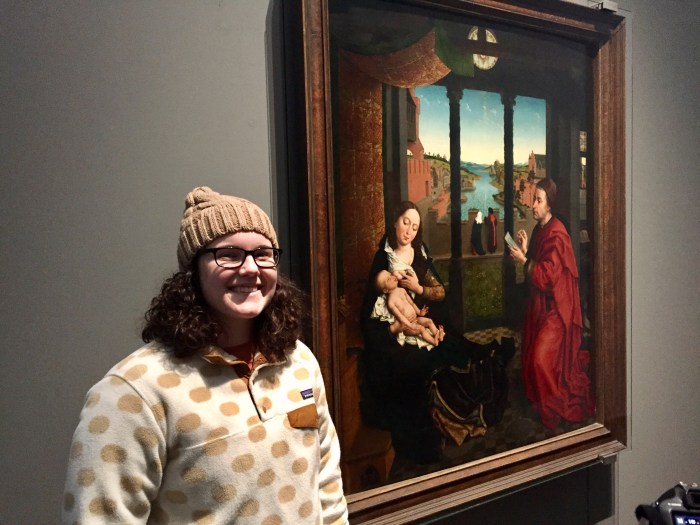
Today at the Groeninge Museum I was assigned to write about the painting St. Lucas drawing the Madonna. It was painted by Rogier Van der Weyden around the year 1435.  I really enjoyed this painting because how much symbolism was represented in the details. St. Lucas is the man who is drawing and he is the patron of the artists. You can tell he is St. Lucas because of the book (he was one of the gospel writers) and the bull in the background beside him. The madonna is pictured without a halo or glowing presence and breastfeeding the Christ child. This is very rare and her portrayal in this painting is very special because it is so normal and nonchalant. She is also viewed from St. Lucas’ perspective at a profile view which is also very rare. Also, the subjects are in the foreground of the picture with a garden out the window followed by the landscape which is very characteristic of primitive Flemish art because they did not yet have much of a grasp on perspective. I very much enjoyed the pieces of art in this Museum  because many of the scenes depicted in the paintings were scenes that we saw in the city of Brugge.

FullSizeRender.jpg

Friday January 6, 2017 7:16 PM

Day 3 of our Belgium experience continues with an in depth walking tour of Ghent. We met our guide, who as we walked, pointed out prominent locations in Ghent along with their history. She took us in the town hall where we got a glimpse of Ghent’s law making and even a chance appearence by the mayor. We went to St.Bravo’s cathedral where we got to see the magnificent sculptures, paintings, and decoration. It was here that we got the see The Ghent Altar piece. As we continued to make our way through the city, we got to see many sidedness of Ghent’s city center. We passed modern shops, 12 century homes, and a 21st century ice skating rink.

We had a wonderful lunch that began with a salmon mousse and white asparagus soup. We then had beef stew with French fries and dessert.

Our afternoon began with a trip to STAM. In this museum, I especially like the books as well as the room with the floor map and miniature model of the city. The room with leather walls relocated from the town hall was very cool as well.

We concluded our day with an amazing trip to the museum of fine art where we got to see the panels of the Ghent Altar piece which are currently being restored. The grandeur of the museum was amazing but my favorite part of both the day and he museum itself was the symbolism room. I stumbled upon this room a little over halfway into my way through the museum and stayed there for much of my free hour. I walked in and saw three paintings that i immideatly loved. They were all together on one wall and I would later find out they are all by the same artist, Leon Spilliaert. Once I found these, I sat and observed them for a long time. One was a picture of a man in silhouette against the background of a window inside a house. The one in the middle was of a woman with unnerving eyes, posing, painted all in black and blue. The last was of what I took to be a bed at an asylum or a hospital. This has a lot of gray in it. My favorite of the three was the woman. This primarily was because of how captivating her presence was. I also really enjoyed all of the sculptures and Oskar Kokoshka’s painting of a man with a blue book.

Day 2: Bruges! Featuring the Jerusalem Church

IMG_2318.JPG

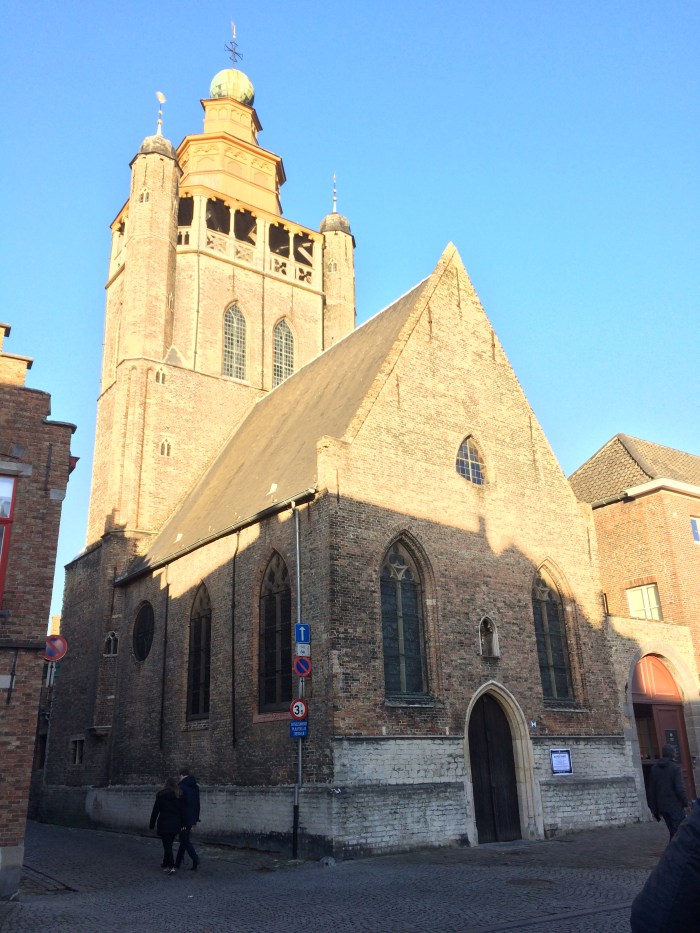
Today, my group and I took a visit to the city of Bruges! We did so much while we were there and saw so many buildings and pieces of art that were important to our history! Places like the Church of Our Lady, the Chocolate Museum, and the Basilica of the Holy Blood! While any of these places would have been amazing to do a blog on, I was given the assignment to make my next blog post about the Jerusalem Church.

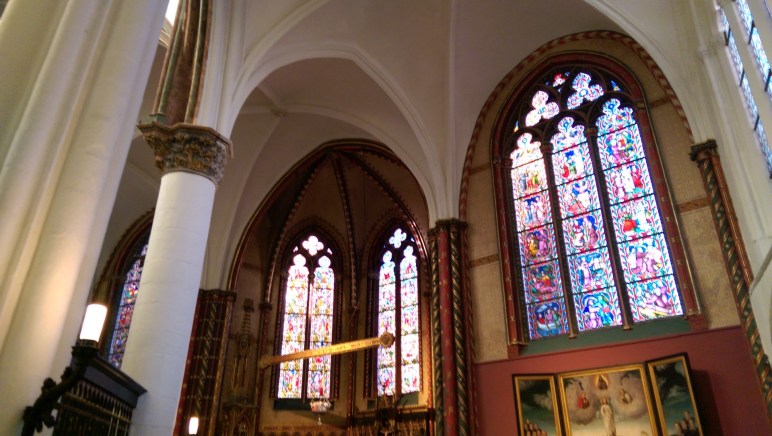
When I first saw it, I knew it was a church. However, it looked very different to me because the top was spherical instead of pointed like most churches. That’s because the architectural style was made in the style of many Israeli and Russian churches. Made in 1423 by descendants of Opicious Adornes, it is the only privately owned church in Bruges and you can only go inside if you have an admissions ticket.

While it was not one of my favorite places that I saw in Bruges, it was still really cool to see! It has such great history behind it and so does the rest of the city!

Michelangelo’s Madonna and Child

After studying the work of the Monuments Men this semester, I was thrilled at the idea of seeing the Bruges Madonna. In fact, seeing her was probably at the top of my list of things I had to do while here. There are so many testimonies to her beauty, her perfection, that I wanted to experience viewing her in person, without the subjective nature of a photograph in the way.

The only work of Michelangelo to leave Italy during his lifetime, stolen twice throughout history, was within my sight today. I was standing maybe 20 feet away from a work that people have dedicated their lives to recovering or restoring. Honestly, I was awestruck. After so much interest and study, I had finally been given the chance to view it with my own eyes, in person, through no one’s lens but my own. The Madonna looking down, somberly, away from Christ, who appears ready to embark on his own. Even through protective glass a fair amount of space, she was striking. I was lost in the detail of the cloth, the expressiveness of her face, and even the body language of the figure. I wanted to remember every detail, but first, I had to find, notice, and acknowledge them all with the respect they were due. The sheer reverence of the space, bolstered by music and a profound silence, left me without words.

Even as we walked away, I felt myself trailing behind, still looking into Mary’s eyes, hoping to catch something I hadn’t yet seen.

Hélène Fourment

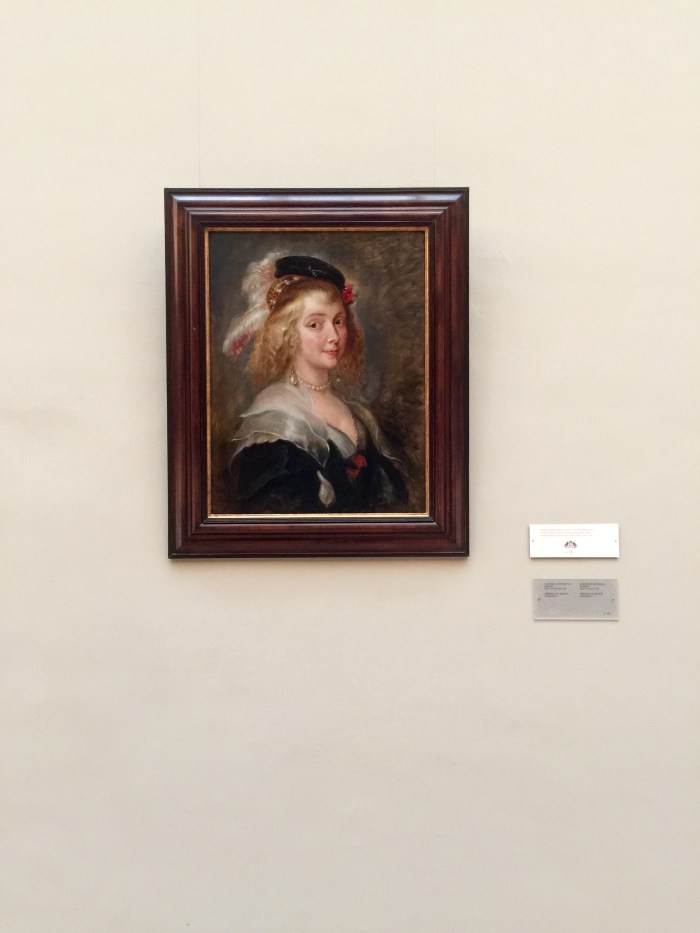
I was assigned the painting Hélène Fourment by Peter Paul Rubens. It is a simple portrait of a woman wearing very elaborate clothes and jewelry. If you just glance at this painting it looks very ordinary but as I stood and stared at the work it is actually extraordinary. The complexity that is shown in the color and detail is incredible. Her clothes and jewelry reflect that she must of been of high standards. I enjoyed this painting very much and the artist (Peter Paul Rubens) is one of my favorite that I’ve seen so far.


img_0240

Art Museum!

img_0902-2

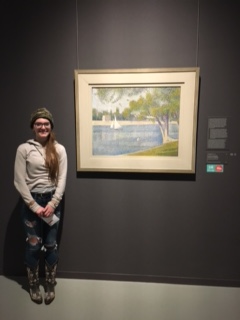
Hello again everyone! Today was an extremely fun day, eventhough I didn’t get much sleep on the plane so I was very tired most of the afternoon haha! The Fine Arts Museum was very big, I was amazed at not only the several different floors that were packed into the building but at the size of the artworks themselves. Some of them were huge! Each student had to find an artwork given to them by our teacher, in this picture I am standing next to mine. This painting is called La seine á la Grande-Jatte by George Seurat.  I really liked this painting because it felt very relaxing and peaceful due to the colors and the blurred allusion from the technique used by the artist. I liked the technique he used, paintingnumeroud dots instead of using brush strokes, because it was different and original. I very much enjoyed this painting because of what it represents which is a calm and quiet day relaxing by the lake.

Til next time,

Juliana Eike

Day two: Le Christ Vert

Today I went to the Fine Arts Museum and was assigned to go check out “Le Christ Vert” by the artist Paul Gaugin

I went with professor Goudas and my travel mates Elisia and Juliana to the 6th floor of the museum in its newer wing. The piece didn’t vary much in value, I thought the green figures with blurred faces were a little creepy, they appear to be on a beach but far from the ocean. I wasn’t really a fan of the piece but there was a couple infront of me looking at it and they seemed to enjoy it.