The Fall of Icarus

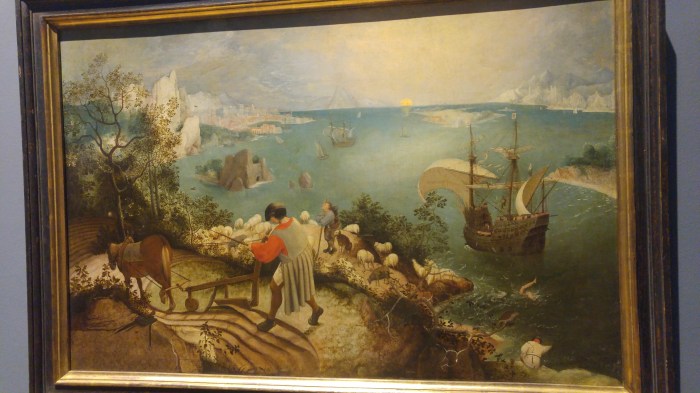
The fall of Icarus has always been a favorite story of mine. Its a life lesson of sometimes soaring to high can make you crash and burn. So I was excited to explore this piece of art.
20170104_145936

As we walked into the art museum we were instantly confronted with this huge space. I remember going through security walking past the main desk and then your in this room. You feel tiny compared to the ceiling that seem to extend forever and the walls themselves stretching up with it. At this point in the trip I wasn’t so much exhausted as my feet hurt. So I decided to sit on the couch for as long as I could. I later would regret this because when I finally decided to have a look around I felt rushed to see all the wonderful pieces.

Anyways once we were all checked in Lilian assigned us a piece of art and we were supposed to observe it. Like I mentioned before my feet were tired so I tried to find my piece as quickly as possible. I went to Bruegel section, my artist name, and searched for my painting. When you think of a painting such as The Fall of Icarus one would assume that majority of the painting would contain Icarus himself, or at-least that is what I thought. I was wrong and once I found an attendant to point out the painting to me I was shocked. Icarus was this tiny little piece of the painting all you could see of him was his feet hanging out of the water.

The piece itself made me feel kinda sad. I felt like it stood as a reminder that the world does not care about you. The painting is not at all inviting where some portraits you feel as if you can just jump in the painting. No this one had all the characters backs facing the observer. Even the fisherman sitting right by Icarus sinking body doesn’t seem bothered as if to say the world will keep spinning without you. I also felt that when Vicky pointed out the mans skull in the plowed fields just left there to waste any. I also noticed that there wasn’t that much detail put in the painting but I think it adds to the idea of being unbothered.

Even though I was tired I really enjoyed going into paintings more en-depth.
Martyrdom of St. Sebastian


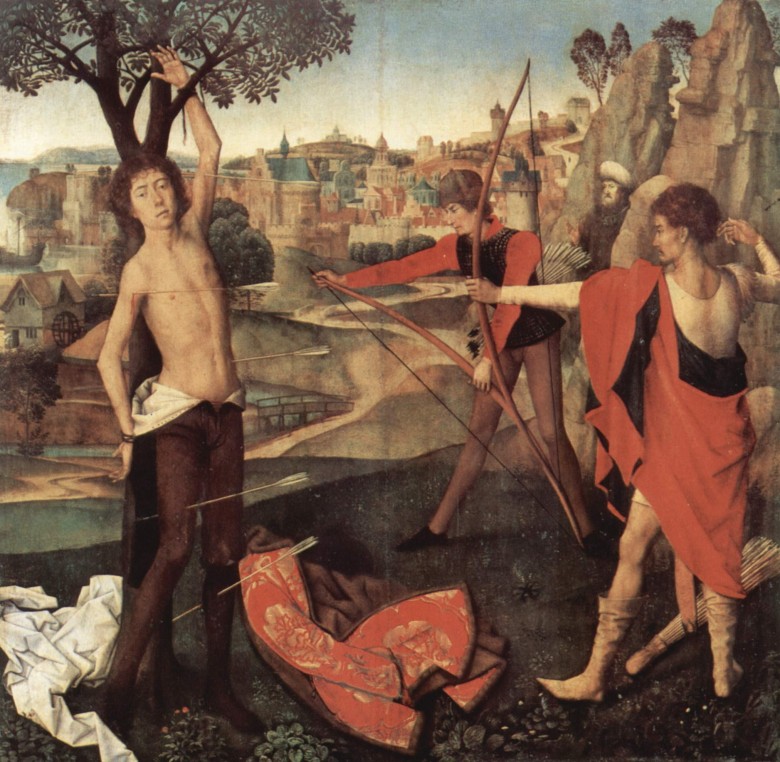
While in the Belgian art museum, I studied the Martyrdom of Saint Sebastian by Hans Memling. What I noticed first about this painting is that, despite being in tremendous pain, the Saint shows no facial expression of discomfort. The painting also shows a lot of perspective, having the city in the background. The colors used seem to be of the style of the other Dutch paintings in the museum. I enjoyed the artwork, and the museum as a whole, and would definitely recommend anyone to go there if they like art!

We Made it-the first day!

img_6642“One’s destination is never a place, but a new way of seeing things.” – Henry Miller
These are already some hearty travelers!

img_6650

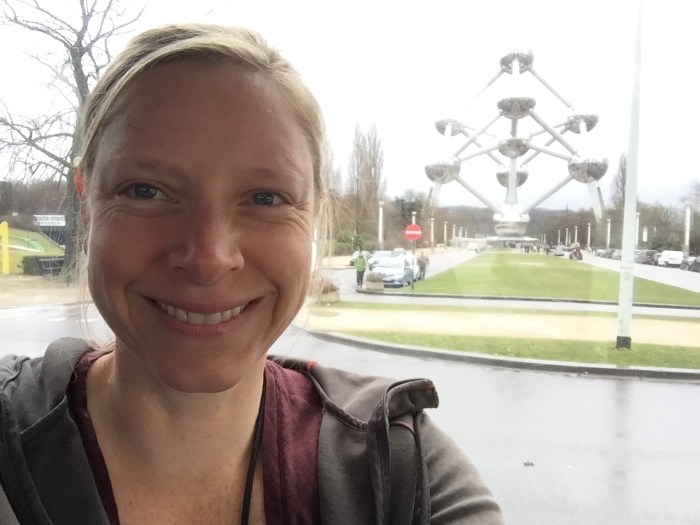
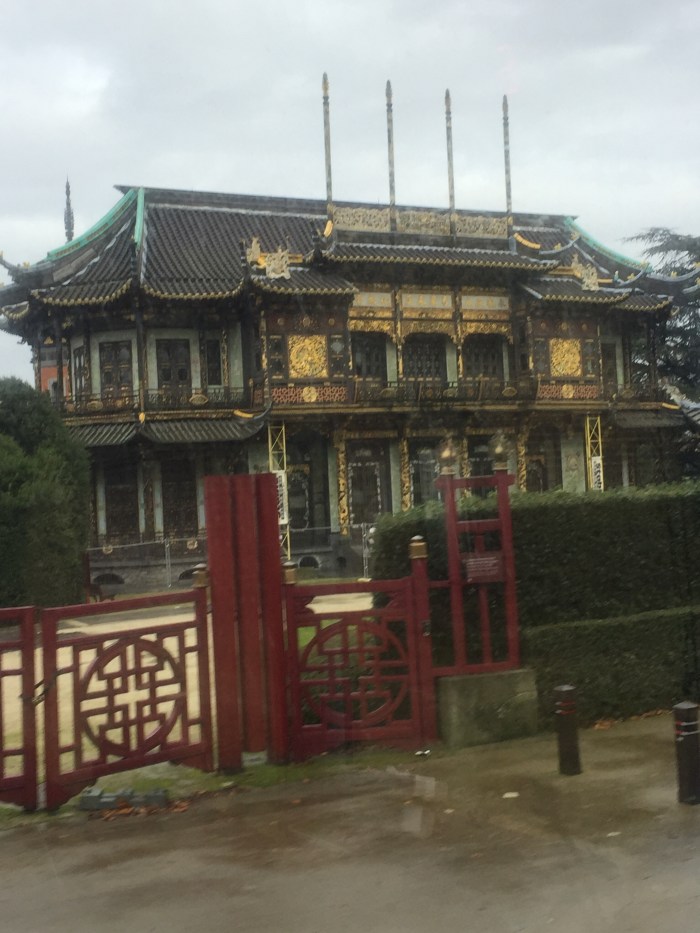
We are all running on less than 5 hours of sleep and we did do a full day of sight-seeing, including a large museum with their first “looking-assignment.” The flight from JFK was uneventful and we arrived about 9:10am Brussels time, which was an early 3am east coast time.  Most students, but not all, got some sleep on the plane.  It took quite a while to wait for our luggage and then by 10:20am we were off to meet our bus and Sasha, our day guide.  We first went to the Atomium, from the World’s Fair here in Brussels in 1958 and continued a bus tour around the fairgrounds, also seeing beautiful buildings from the Japanese and Chinese from 1905.


img_6652

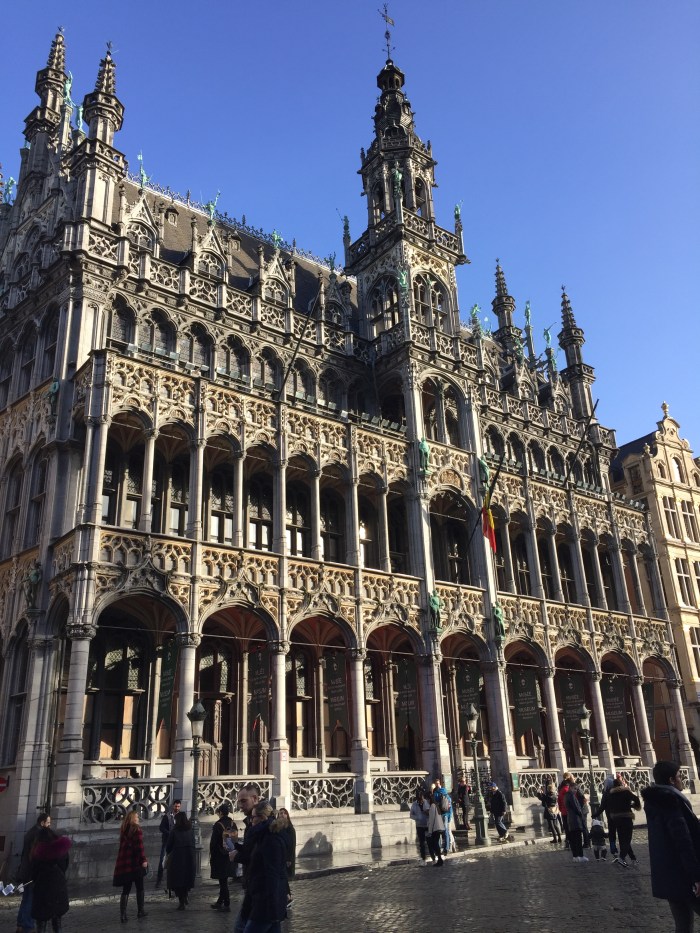
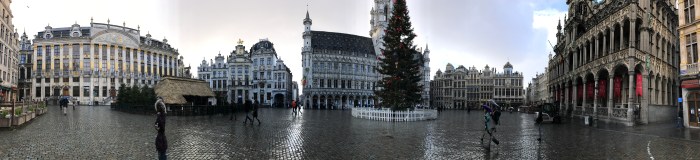
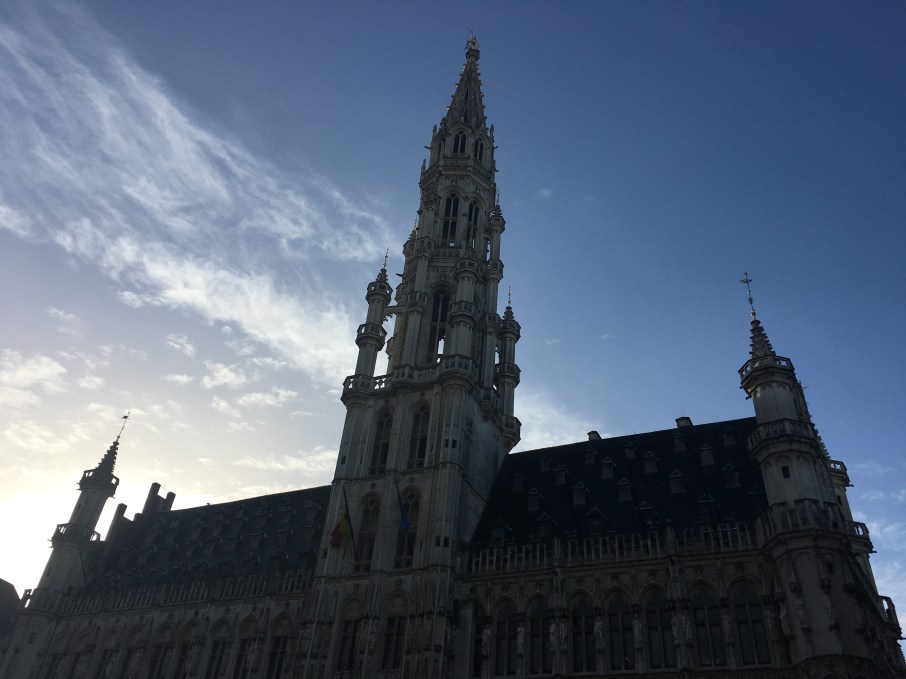
Then we walked on a tour of the old city of Brussels, and by far the most impressive thing was the Grand Place, or city square.  Various facades from the 17th century encircle a large Christmas tree and stable scene at the moment.  We also saw the guild houses places their with their immaculate facades all around the imposing square.

img_6689

Then a break for lunch allowed for some waffles and Pommes Frites (fries) and then a walk to the Fine Arts Museum in Brussels.  You will see each student had to find and look at one work of art there and write about it briefly–just to spend some time with the artwork itself.  We were all pretty tired by the end of this day and met our bus driver to ride to our hotel in Ghent.  After a quick check in we walked around the Christmas market and found some places to eat.  Now students are finishing their blog posts and sleeping.  Soon enough I will be too!

Tomorrow, BRUGES!

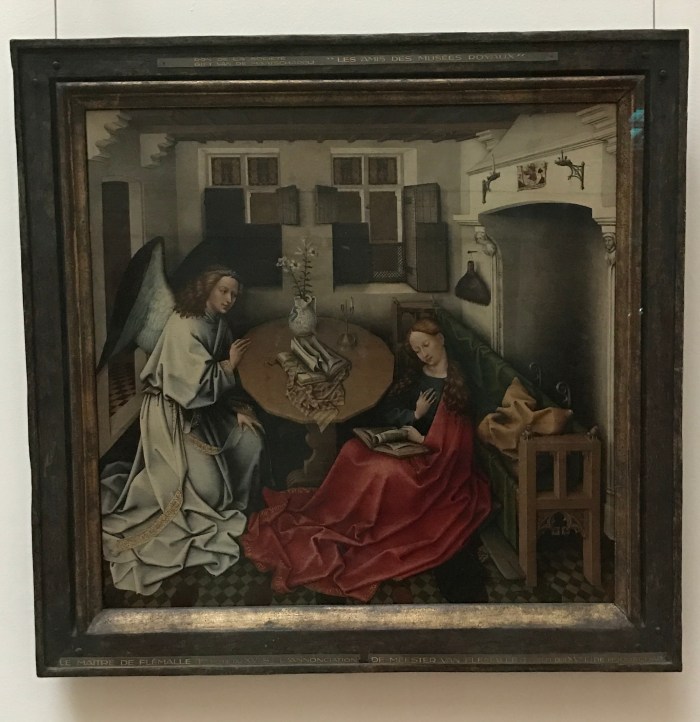
The Annunciation by the Master of Flemalle

IMG_0451.JPG

Today we landed in Brussels, Belgium and traveled to multiple museums where we had the chance to look at comics and of course beautiful pieces of art work. The last museum we visited was the Fine Art Museum, which had many famous works of art. Each student was given a piece of art to search for, admire, and contemplate. My piece was the Annunciation by the Master of Flemalle. As you can see in the picture above, the painting is truly magnificient. It really captures your eye and makes you wonder the story behind the piece. My first thought was maybe the Angel was talking to Mary and they were having a breakfast together in her home. I had many of my friends view the painting too and they agreed with me. The piece was very dark in the background but also very comforting to see the angel and her detailed wings. Overall, I enjoyed being able to see this painting in person and the many other paintings in this mueseum!

First Day Abroad!

The day began right after we hopped off the plane in Brussels–we took barely anytime through customs before we boarded our own bus and headed off to see the sites. On the way to the Brussels Museum–where we spent the bulk of our day–we were able to see many of the different buildings throughout Brussels. The buildings ranged from Gothic, to optimistic, to Japanese structures and even to smaller 18th century apartments. The bus and walking tours were exciting and gave an overall view of Brussels. The museum, however, gave some more history.

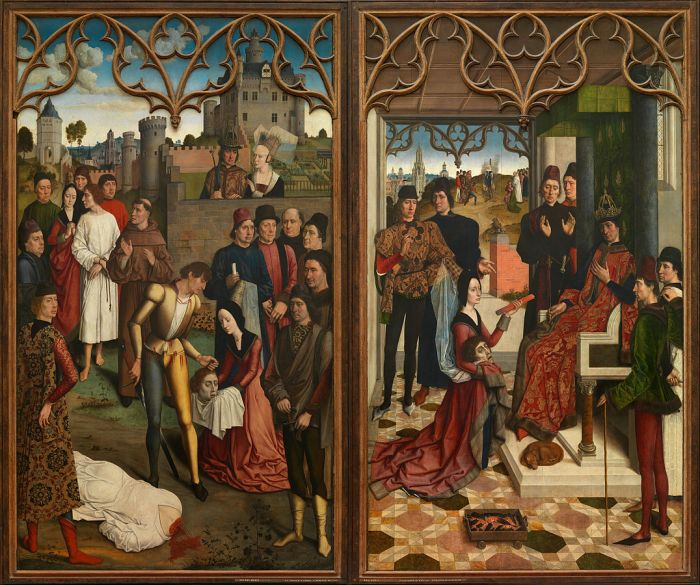
In the museum I was given the task to find and analyze Justice of Emperor Otto III by Dirk Bouts. otto.jpg

So many things are happening in this piece it was hard to tell what the whole story was. A few things I noticed was that the joker-like dressed man that beheaded a manfor Emperor Otto III is also seen setting fire to a woman in the background (which appears in both paintings, she seems to be whispering something in the piece on the left). Additionally, the backgrounds change from great castles to almost a church/cathedral image which may have something to do with the Emperor’s hierarchy. Also all the men seem to look too strangely alike; I could tell the differences between the first and second paintings of the men because of their clothes and small features.

But after staring at this piece I am left with more questions than answers: why is the emperor having this man beheaded in the first place? Who is this man? What is in the small box on the right? Why is the man who has done the beheading dressed the way he is? Who is the woman being burned at the stake? Why does a monk appear on the left but not on the right? What is the featured woman holding in her left hand? Could it be a scroll?
I hope to answer these questions and more..soon…hopefully.
The first day was a good start but I can’t wait to see what to do tomorrow.

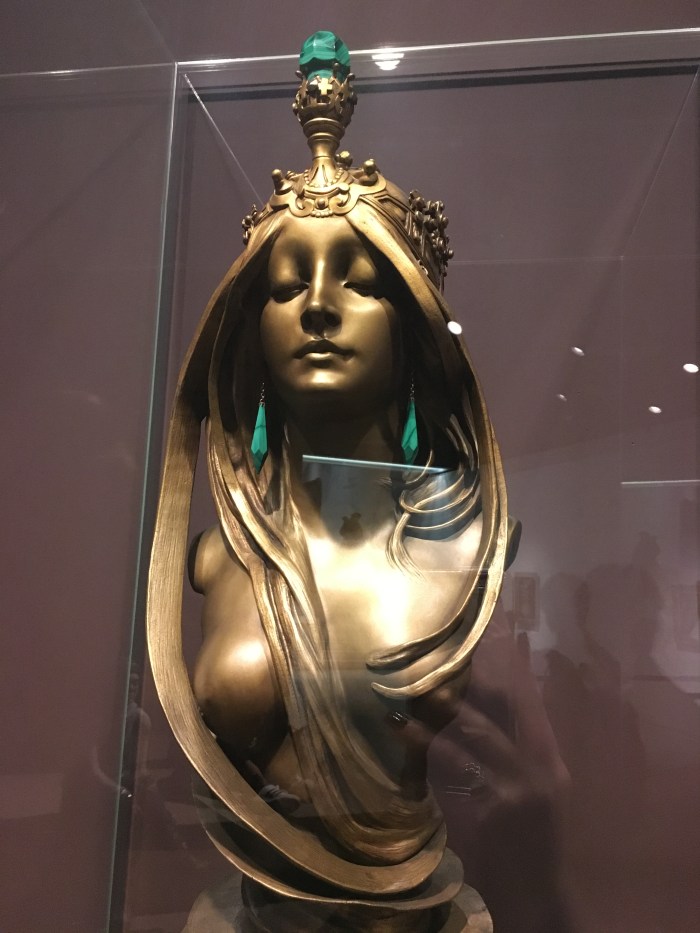
La Nature by Alphonse Mucha

IMG_3566.JPG

While in Belgium 🇧🇪, we where able to go to one of the museum that houses the most art work from the past 500 year (mostly all 16th & 17th century). While there, I was able to see this beautiful sculpture, La Nature, by Alphonse Mucha. The artist of this sculpture lived from 1860 – 1930 and was said to be made between 1899 – 1900. This piece is made completely of brass with gen stone accents on the main crown stone and the earrings.

When I first saw this piece I was blown away, but after looking at all the specific details put into this piece I was astonished. Alphonse Mucha created a realistic and beautiful piece. Especially with its age, the upjeeping and protection of such work is key in its survival for all art lives to see and admire. This piece definitely draws attention to its self even without introduction due to its craftsmanship and detail, and is a key attraction in the end of the century exhibit in the masters museum.

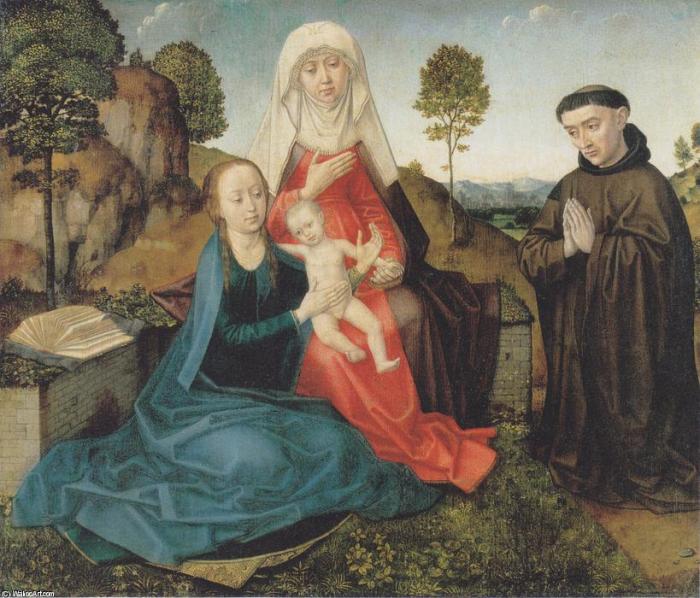
Virgin and Child with St. Anne and a Franciscan Donor

hugo-van-der-goes-virgin-and-child-with-st-anne-and-a-franciscan-donor

Each student was given a piece of art from the Fine Arts Museum in Brussels to find, observe, and contemplate. My selection was “Virgin and Child with St. Anne and a Franciscan Donor” by Hugo van der Goes. I did not take a picture of the physical copy of the painting due to the strictness of some security guards in art museums. Even if they allow photos to be taken, like this museum did, I still tend to shy away from using a camera. A photo of the painting is inserted above in order to better connect to the painting via the internet.

It was not a hard painting to find, as it was one of the first to be viewed on the main floor of the museum. It was a lot smaller than I imagined it would be, and shared a wall with another work that had a similar style. However, the lack in size did not mean a lack in detail. The natural landscape of the background is very serene; the leaves are clearly marked, the cracks in the boulders are realistically shadowed, and even the mountains and their small presence in the very back are painted as if they were just as important as the natural viewpoints more towards the front. My personal favorite detail of the painting is the book on the left side with its pages blowing in the wind.

The people of the painting all look a little strange. Their postures are very stiff, and the baby is oddly proportioned. The portrayal of the baby vaguely reminds me of how baby Jesus was painted during the Byzantine Era as a rather small man than a soft newborn. Each person appears to be gazing peacefully in their own specific direction. The scene is very calming to look upon and was a lovely painting to reflect on how of the components work together to elicit this feeling.


The First Day


IMG_3605.JPG

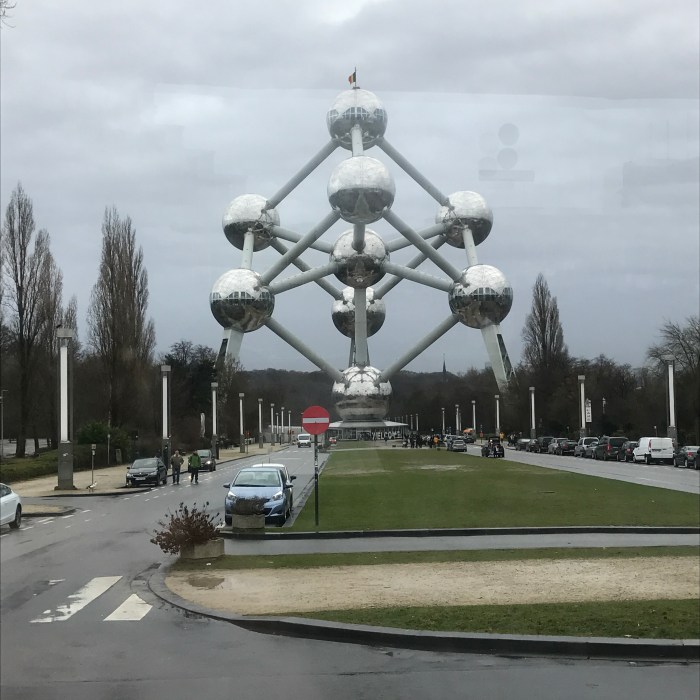
The day began with the plane arriving in Belgium around 9:20 am. Everyone was tired from the ride. I slept through the small breakfast given on plane. After we got our luggage from baggage claim, we got on a charter bus and drove around the city. We saw various home structures along with a few remaining buildings from the 1958 World Fair. The picture shown above shows the Atomium. All but 3 spheres can be visited by the public. About 10 years ago, the aluminum part of the building was replaced with stainless steel. This made the Atomium maintain its shiny appearance easier. Later on, we visited the famous Comic Strip Center. While there, we saw popular comics like The Smurfs and Tintin. 

IMG_3614.JPG

After the Comic Strip Center, we walked to see the World Heritage Center. This picture shows the Center behind the Christmas Tree along with many other beautiful buildings in the area.

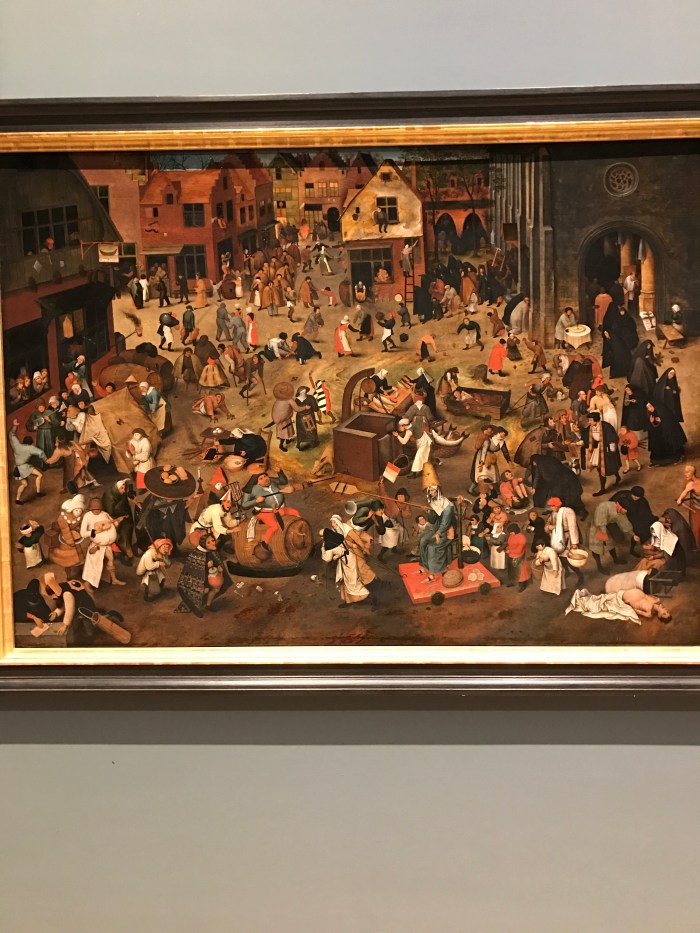
While at the Royal Ancient Art Museum, I saw the painting The Struggle Between Carnival and Lent by Pieter Bruegel the Younger. It is very similar, if not an exact copy of his father’s work The Fight Between Carnival and Lent by Pieter Bruegel the Elder. Just like in his father’s painting, Bruegel the Younger shows a visual representation between the seasons Carnival and Lent. How Carnival is on the left side of the painting centered around a tavern a Lent is on the right side centered around a gothic style church. The size of the painting was a lot bigger than I expected. The whole day was fun and exciing, but now that it is over, I am ready to go to bed to get some sleep to prepare for tomorrow.

IMG_3619.JPG
Enter a caption

Brussels: Fine Arts Museum- Cassidy

IMG_4071.JPG
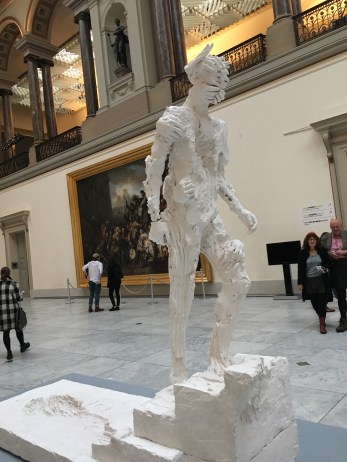
Going to a new country is both exciting and nerve wracking, yet I find it to be amazing that walking into an art museum such as this one is able to take you away from your worries and the chaos of your surroundings. When first walking into the museum in Brussels, I was surprised with a sculpture of one of my favorite artists, David Altmejd! The sculpture is pictured below:IMG_4087.JPGAlthough this sculpture may seem very different to some, I believe that his creativity is inspiring and very different from the “norm.” I am very excited that I got the opportunity to witness his piece in person (and coincidentally!).
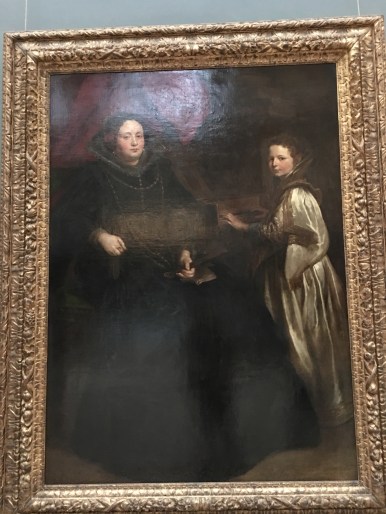
Upon entering the museum, we were given an assignment to go search for a piece, admire and study it, and then report on it for today’s blog post. My Piece was A Portrait of a Genoese Lady with her Daughter by Antonie Van Dyck: img_4083This piece was very heartwarming knowing that I was witnessing an actual Van Dyck masterpiece in person. I admired how the darker colors for the background added light to the woman and her daughter, giving them power and prestige. Although I do not know anything about the woman or her daughter, I am able to tell that they were of high honor due to how they are portrayed in this picture. I noticed how the daughter had on light colors, which may have represented purity. The little details are really evident in this piece and I am glad that I was given the task to find and analyze it.

I am very excited for more adventures to come!

The Lamentation

I observed the masterpiece The Lamentation by Rogier Van Der Weyden.  This piece is one of religious symbolism and evocative feelings.  What first stood out to me was the large tree in the back right corner.  The tree is barren and is symbolic of Christ’s death on the cross.  Potentially the tree is dogwood which is the tree in which the cross was made out of.  In contrast to the dead tree, there is a sunrise and green vibrant trees in the middle background.  This represents that the resurrection of Christ is coming.  The picture while portraying deep sadness also embodies ideas of hope and optimism.

For Christians around the world this artwork will always possess great meaning and inspiration.